

Canada is preparing to hit a wide range of U.S. imports with tariffs of up to 50%, and the decision could create headaches for parts of the skateboarding industry that rely on maple wood and cross border suppliers.
As we previously reported, President Donald Trump announced a new 50% tariff on a wide range of Canadian imports, raising questions about what it could mean for skateboard brands.
READ MORE: Trump’s 50% Canada Tariffs Could Make Canadian Maple Skateboard Decks Even More Expensive

Now Canada is hitting back, announcing Tuesday that it will apply tariffs on roughly C$27.6 billion worth of U.S. goods, equivalent to around US$20 billion.
According to reports, measures are scheduled to take effect on September 8 and are intended to match duties recently introduced by the United States on Canadian products.
Finance Minister and National Revenue Minister François Philippe Champagne said the Canadian response would match the U.S. tariff rate for the same category of goods, with rates reaching 50% on certain products.
The wider trade dispute could also affect businesses that depend on imported materials and products as costs work their way through supply chains.
For skateboarding, one area worth watching is maple.
Canadian skateboard brands, wood shops, distributors, skateshops, and independent builders can all be affected when the cost of getting decks from one country to another increases.
RELATED: OG Skate Head Chris Eidem Creates Tee Protesting Tariffs & Says It’s Killing Skateboarding

Maple has long been an important material for skateboard construction because of its strength, flexibility, and ability to handle repeated impact.
The issue becomes more complicated when a deck crosses borders several times before reaching the person who eventually rides it.
A skateboard might begin with maple sourced for manufacturing, move through a wood shop or deck producer, reach a distributor, and then arrive at a skateshop.
Every additional cost along that chain can influence the final price.
If tariffs increase expenses for companies involved in importing or distributing skateboarding products, retailers may have fewer options when trying to keep prices affordable.
That could matter most for skaters who are shopping on a budget.
Someone looking for a lower priced complete skateboard or deck may feel the effects sooner than a customer buying premium equipment.
Even a modest increase in wholesale costs can become noticeable once shipping, distribution, retail margins, taxes, and other expenses are included.
Skateshops could also find themselves in a difficult position.
Core shops already have to balance inventory costs with what local skaters can afford. Higher costs from suppliers may leave retailers choosing between raising prices, accepting smaller margins, or carrying fewer products.
RELATED: AriZona Skate Team Boss to Raise 99-Cent Iced Tea Price Over President Trump’s Heavy Tariffs

Distributors face a similar problem.
Companies bringing skateboarding products across the Canada U.S. border could have to reassess pricing, inventory levels, and where certain products are sourced.
If costs rise enough, distributors may look for suppliers outside the affected tariff categories or consider expanding their relationships with Canadian manufacturers.
For maple wood shops, the situation deserves close attention as well.
Any change involving the cost of raw materials, manufacturing inputs, transportation, or finished skateboard products can affect production decisions.
Shops that supply decks to brands or other businesses may need to account for changing costs when setting their prices.
There is also the question of what happens to the wider skateboarding community.
Skaters do not always have a lot of room in their budgets for equipment. A skater replacing a broken deck may simply want an affordable option that can get them back on their board.
If prices climb across several brands at once, shoppers could start looking harder for sales, blank decks, local products, or less expensive completes.
Canadian brands and manufacturers could potentially benefit from that shift if they can offer competitively priced products made within the country.
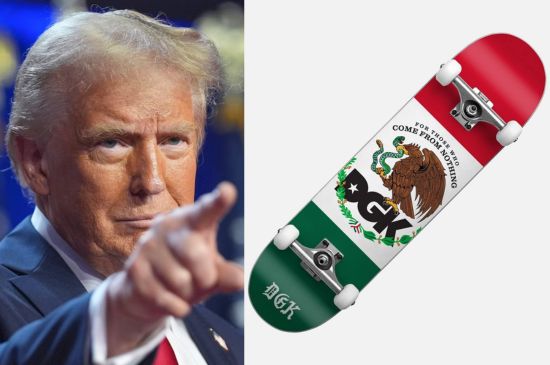
RELATED: President Trump Imposes 30% Tariffs on Mexico, Skateboards Made South of the Border to Cost More
The government has encouraged Canadians to purchase domestically produced goods as part of its response to the trade dispute.
For local skateboarding businesses, that could create opportunities as well as challenges.
Canadian wood shops may have an opportunity to work more closely with domestic skateboard companies.
Distributors could also explore different sourcing arrangements, while skateshops may give more shelf space to Canadian made decks if those products provide good quality at a price customers can manage.
Still, changing suppliers is not something a business can do overnight.
Skateboard companies have established relationships with manufacturers, wood shops, distributors, and retailers.
Production capacity, deck specifications, pressing methods, shipping costs, and quality control all have to be considered before a company changes where its boards are produced.
The trade dispute also comes at a time when skateboarding businesses are already dealing with the usual challenges of manufacturing and retail.
RELATED: MAGA Pro Skater Danny Way Says He’ll Keep Fighting For Trump, Even Tariffs Affect Skate Industry

For smaller companies, another increase in operating costs can be especially difficult to absorb.
The Canadian government says the tariffs are part of a broader effort to protect Canadian workers and businesses following the U.S. decision to impose its own duties on Canadian goods.
Officials have also announced financial assistance for businesses and workers that could be affected.
The two countries have one of the world's largest trading relationships, so the effects may extend well beyond the products directly listed under the new measures.
Costs can travel through supply chains, meaning a tariff placed on one category can eventually influence businesses that depend on it.